
Step one
Print and take the test
Schedule a test and download the booklet. Students work at their own pace over about three days — an hour or two at a time, no rushing.

Diagnostic Academic Assessment
Three tests a year, built for homeschool families. Schedule them, take them at home, and see exactly where your student is strong and where to spend the next few months.
Nobody fails. Students are never ranked against each other.
Why our reports read differently
Most testing gives you a single score per subject. We split each subject into its parts, so a result is something you can act on this week — not just a number to file away.
True, and not much use. It doesn't tell you what to work on.
Same student, same test. The second one is a plan.
How testing works
Younger students still write, draw, and color on real paper — that's how you see their best work. Everything around it moves online.
Step one
Schedule a test and download the booklet. Students work at their own pace over about three days — an hour or two at a time, no rushing.
Step two
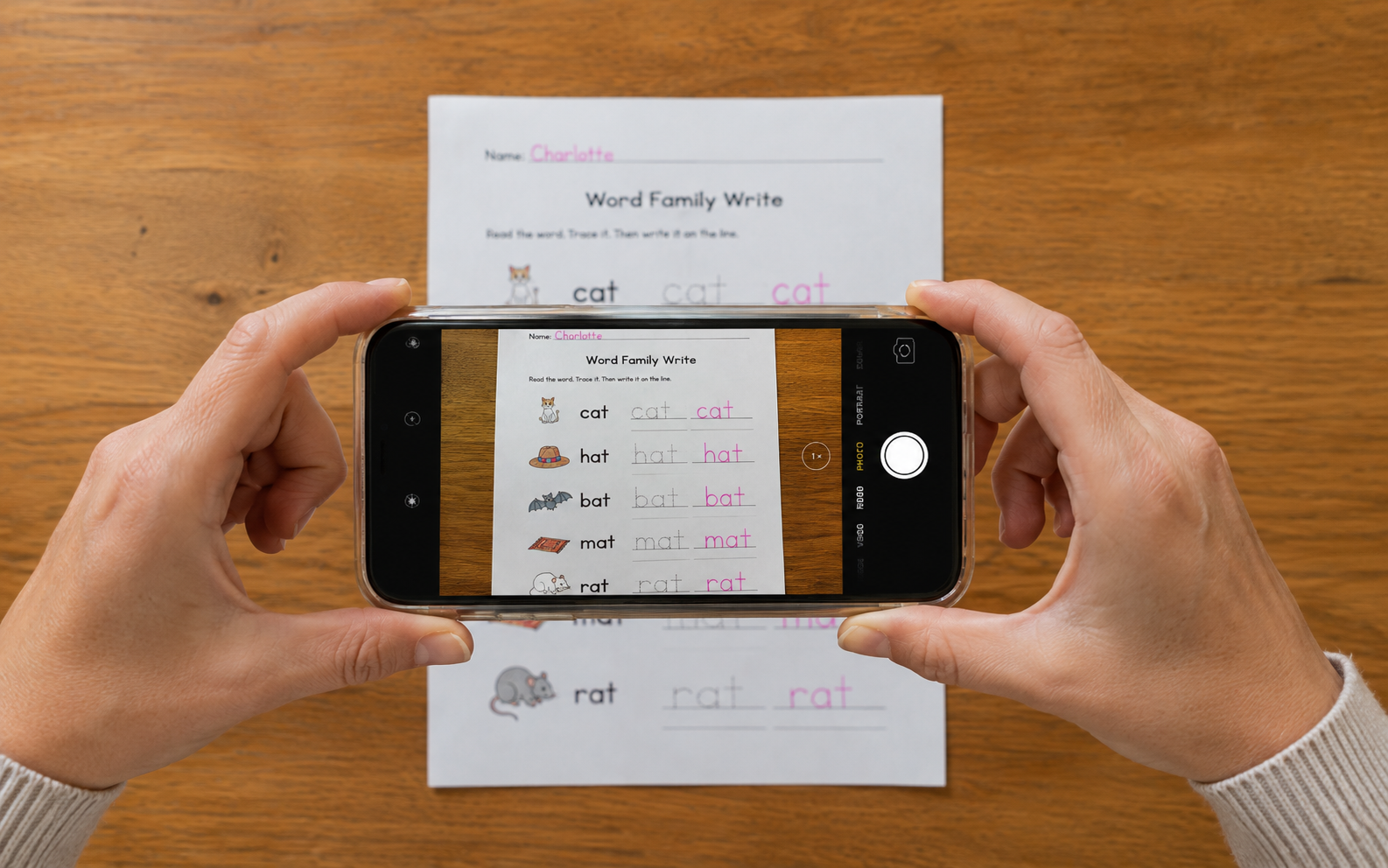
Snap each finished page with your phone and upload. No mailing, no waiting on the post office, no photocopies to keep track of.

Step three
Every page is scored and reviewed by a person. You get a detailed report, and every test your student takes stays on their dashboard to compare against.
One test shows you where your student stands today. Three shows you how far they've come this year.
September, January, and April. About an hour a day, for three days.
Six levels
Levels overlap on purpose — students learn at different rates. Once you pick a level in September, your student stays there through January and April, so a year of progress is measured on the same yardstick.
These tests are diagnostic. They are not accredited and do not count toward graduate status. They're built to show you what a student knows at their age level — and how much that grows over the year.

Be first through the door
Scheduling, testing, payment, and every year of your student's results in one place. Leave your email and we'll write to you the day it opens.
One email when we launch. Nothing else, and no sharing your address.
Accounts open soon
We're building the first online home for National Testing Center — registration, scheduling, and your student's full testing history in one place. Leave your email and you'll be among the first parents we invite in.
One email when we launch. Nothing else.